I have a photograph taken in Piazza San Marco at 6:47 on a November morning. No tourists. No pigeons, even. Just the wet stone reflecting the arcades, a single street cleaner pushing a broom, and the Basilica glowing faintly gold in the pre-dawn light. People look at that photo and assume I faked it. I did not. I just woke up absurdly early.
San Marco is the most visited square in Venice, which means it's also the most complained about. Too crowded. Too commercial. Too many people holding selfie sticks at unfortunate angles. And all of that is true — between 10am and 6pm. But the square exists at other hours too, and it becomes an entirely different place when the cruise ship passengers haven't arrived yet.
In This Article
Why I Set an Alarm for 6:30
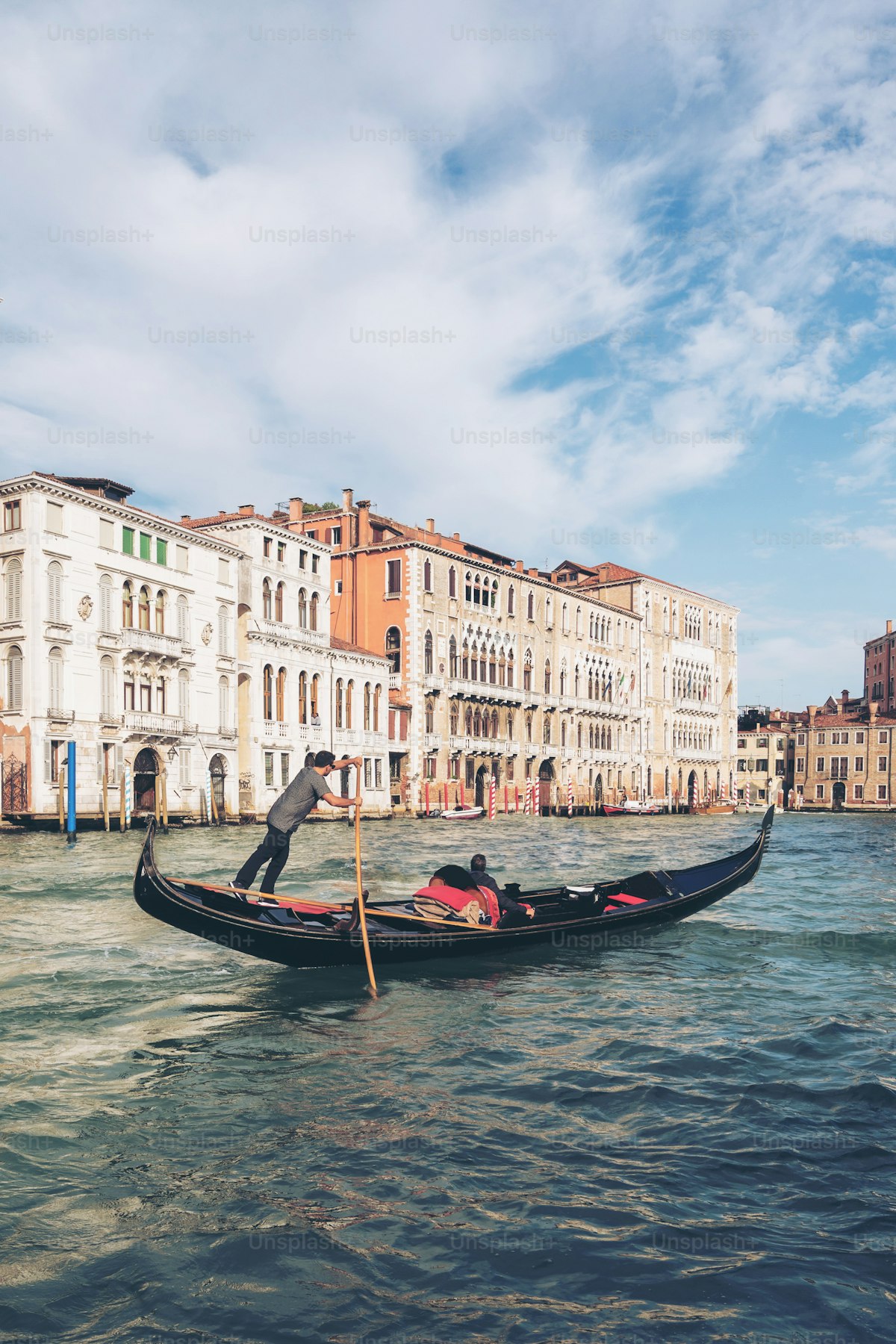
The square opens — in the sense that nobody stops you from walking through it — all night. But the sweet spot for a peaceful visit is roughly 6:30 to 8:00 in the morning. By 8:30, the first tour groups start appearing. By 9:30, it's already getting dense. By noon in summer, you can barely see the floor.
What you get at 7am: the geometry. San Marco is, at its core, a masterpiece of proportional architecture. The Procuratie Vecchie and Nuove flanking the piazza like two arms, the Basilica closing the far end, the Campanile standing slightly off-centre because Venice never quite does symmetry the way you'd expect. You simply cannot see any of this when five thousand people are standing in it.
I've shot San Marco in every light condition imaginable. My favourite is winter fog. The square disappears into grey, the Campanile fades halfway up, and the only sound is your own footsteps on the stone. It's the closest I've come to a religious experience without entering the church itself.
The Basilica — What Most People Walk Right Past
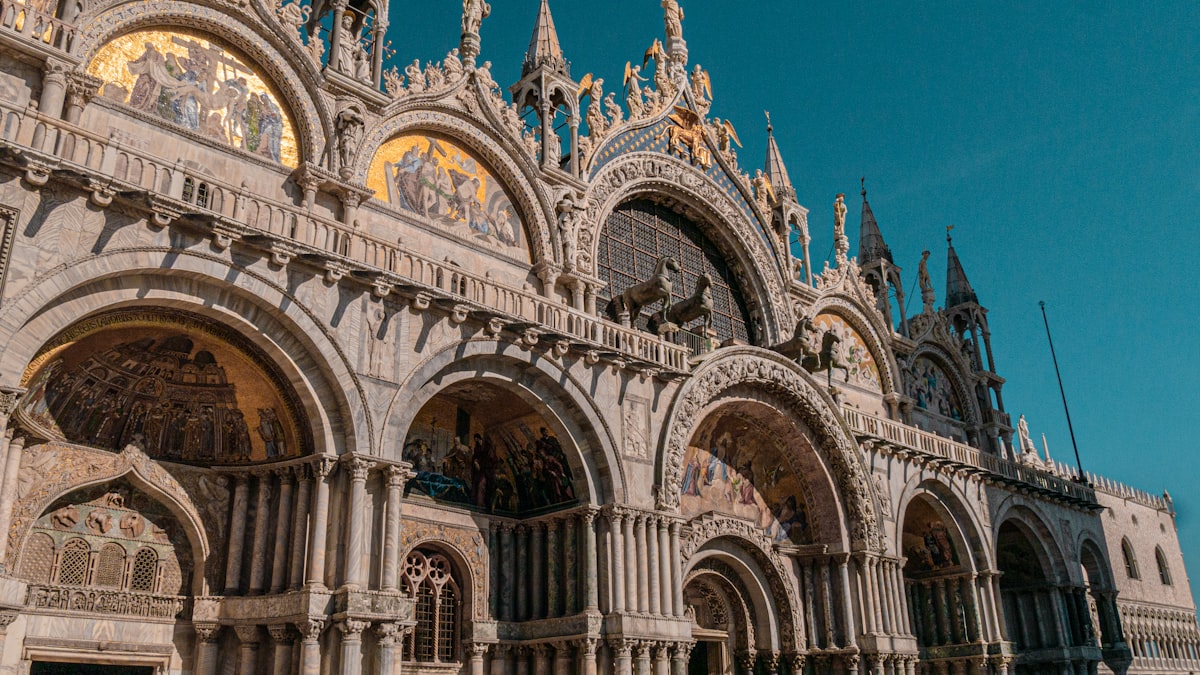
St. Mark's Basilica opens at 9:30 most mornings (check the schedule — it varies by season and religious services). The queue can stretch across the square by 10am. Here's the approach I use: book a timed entry on the Venezia Unica website for the first available slot. It costs a few euros but eliminates the queue entirely. If you're the sort who doesn't plan ahead — I understand, I was too, once — arrive by 9:15 and stand near the leftmost door.
Inside, look up. Immediately. Most visitors shuffle through staring at their phones or at the ropes guiding the queue. Meanwhile, 8,000 square metres of gold mosaic are happening above their heads. The mosaics date from the 12th to the 16th century and they tell the entire biblical narrative in Byzantine gold. The oldest ones, in the main dome, have a quality to them that later restorations lack — slightly rough, slightly imperfect, which somehow makes them feel more human.
Three things worth seeking out specifically:
- The Genesis Cupola (first dome as you enter the narthex) — 13th-century mosaics showing the creation story in concentric rings. The detail is extraordinary. God creating the animals looks genuinely delighted by the results.
- The Pala d'Oro — the gold altarpiece behind the main altar. Costs €5 extra to see up close. Worth it. It's a wall of gold, enamel, and gemstones assembled over four centuries, and it's one of those objects where photographs cannot convey the scale. I stood in front of it for twenty minutes once and a guard gently asked if I was all right.
- The Bronze Horses — the originals are in the museum upstairs (€7). The ones outside on the loggia are replicas. The originals are over 2,000 years old, possibly Greek, looted from Constantinople in 1204, briefly stolen by Napoleon, and now standing in a glass case looking mildly annoyed about the whole business. Upstairs also gives you access to the loggia terrace, which offers the best elevated view of the Piazza.
“Venice is a city that rewards looking upward. The Basilica is where that lesson begins.”
The Campanile: 99 Metres of Queue Management
The bell tower is hard to miss. It's the tallest structure in Venice at 98.6 metres, and it collapsed completely in 1902 — just fell down one morning — and was rebuilt to look exactly the same. The Venetians, pragmatic as ever, simply put it back.
The lift takes you to the top for a €10 ticket. Views are panoramic: the lagoon, the islands, the rooftops, the Dolomites on a clear day. It's genuinely worth doing once.
The queue is the problem. In summer it can be 60–90 minutes long. Two ways around this:
- Go at opening time (9:30). The queue builds by 10:15, so arriving early cuts wait time to 10–15 minutes.
- Go at 6pm or later in summer (extended hours until 9pm in July/August). The light is better for photography anyway — the warm evening light hitting the terracotta rooftops is worth the price of admission alone.
I've been up thirteen times. That seems excessive now that I've written it down. But the light is never the same twice, and that's the point.
Is a €15 Coffee at Caffè Florian Worth It?
Yes. Once.
Caffè Florian has been open since 1720. It is the oldest coffee house in continuous operation in Italy, possibly the world. Casanova drank here. Byron sat here and was Byron about everything. Wagner presumably composed something on the back of a napkin.
Today, a cappuccino at an inside table costs around €12–15, and if the orchestra is playing outside, there's an additional music surcharge of about €6. So you might pay €20 for a coffee. That's absurd. That's also the price of sitting in a room that has been serving coffee to interesting people for three hundred years, with frescoed walls and velvet banquettes and mirrors that have reflected more faces than any photograph.
| Caffè Florian | Caffè Quadri (across the square) |
|---|---|
| Open since 1720 | Open since 1775 |
| Ornate painted rooms, Baroque style | Slightly more modern interior, recent Starck renovation |
| South side of Piazza (sun in morning) | North side (sun in afternoon) |
| Cappuccino €12–15 | Cappuccino €11–14 |
| More famous, busier | Slightly quieter, same views |
If paying €15 for a coffee causes you physical pain, walk three minutes off the square to any normal bar and pay €1.50 for an espresso that tastes, if we're being honest, largely the same. The coffee at Florian isn't the point. The room is the point.
The Clock Tower and the Piazzetta
The Torre dell'Orologio — the clock tower on the north side of the square — is one of those things you walk past a dozen times before you actually stop and look at it. The clock face is beautiful: blue enamel, gold zodiac signs, the Earth at the centre (the Venetians were geocentrists when they built it in 1499 and never bothered to update). At the top, two bronze figures — known as "the Moors" — strike the hours with hammers.
You can tour the interior, but only by booking in advance. Groups are small (12 people maximum). I did this on my ninth or tenth trip and it was fascinating — the clockwork mechanism is original, still ticking, and maintained by a single family that has held the contract for generations. Book via the Correr Museum or Venezia Unica.
The Piazzetta is the smaller open area that runs from the square down to the waterfront, between the Doge's Palace and the Library. The two granite columns at the waterfront end — one topped with St. Mark's lion, the other with St. Theodore standing on a crocodile — were the traditional entrance to Venice for anyone arriving by boat. Executions used to take place between them, which is why superstitious Venetians still won't walk between the two columns. I walk between them regularly. Nothing has happened yet.
When the Square Becomes a Swimming Pool
Acqua alta — high water — is Venice's regular flooding, mostly between October and March. When it happens, San Marco is usually the first area to flood because it's the lowest point in the city. Water rises through the drains, seeps across the stone, and within an hour the square can be ankle-deep.
Should you avoid Venice in acqua alta season? Absolutely not. Some of my best photographs were taken during flooding. The square becomes a mirror — the Basilica reflected perfectly in two inches of water, the arcades doubled, the whole geometry of the place turned into something hallucinatory. The city puts out raised walkways (passerelle) so you can still move around, and Venetians treat it all with a shrug that borders on aggressive nonchalance.
Pack waterproof shoes, though. That much I will insist on. I once spent an entire day in November with wet socks and it permanently altered my relationship with hosiery.
What Happens After the Crowds Leave
By 8pm in winter, 9pm in summer, San Marco empties. Not completely — there are always a few people — but the square transforms. The orchestra at Florian might still be playing to a half-empty terrace. The Basilica is lit from below, the gold mosaics on the exterior catching the floodlights. The Campanile stands against whatever the sky is doing that evening.
I come back to San Marco at night more often than during the day now. There's a melancholy to it that I've never quite managed to photograph — the sense that this enormous space was built for ceremony and spectacle, and at night it remembers that, even with nobody watching.
Walk through the square at 10pm on a weeknight in January. Stand in the middle. Listen. You'll hear water somewhere — there's always water somewhere in Venice — and maybe the clock striking, and the faint sound of a television from one of the apartments above the Procuratie. That's the San Marco that keeps pulling me back. Not the daytime version with the queues and the overpriced souvenirs. The quiet one. The one that's been there for a thousand years and will be there long after the selfie sticks are gone.