I resisted the gondola for years. Thirty-something trips to Venice and I treated it like a point of principle — I was a serious person, a photographer, not a tourist who'd pay eighty euros to sit in a boat while someone in a stripy shirt sang O Sole Mio. Then one evening in late September, a friend visiting from Edinburgh for the first time asked if we could try it. I said fine. We climbed in near Santa Maria Formosa, the gondolier pushed off, and within thirty seconds I understood why this particular cliché has survived for five hundred years.
So here's my honest take. The gondola is touristy. It's also one of the most beautiful ways to experience Venice. Both things can be true simultaneously.
In This Article
The Official Price List
Gondola rates are regulated by the city. Gondoliers don't set their own prices — there's a published tariff. Here's what you'll pay:
| Detail | Daytime (before 7pm) | Evening (after 7pm) |
|---|---|---|
| Standard ride (30 min) | €80 | €100 |
| Each additional 20 min | €40 | €50 |
| Capacity | Up to 6 passengers | |
| Singing gondolier | €30–50 extra (negotiable) | |
That's €80 for the boat, not per person. Split between two people, it's €40 each. Between four friends, it's €20. Between six strangers who met in a hostel bar and decided to share, it's about €13 — roughly the price of two Aperol spritzes on the Grand Canal.
The maths changes the picture, doesn't it?
What It Actually Feels Like
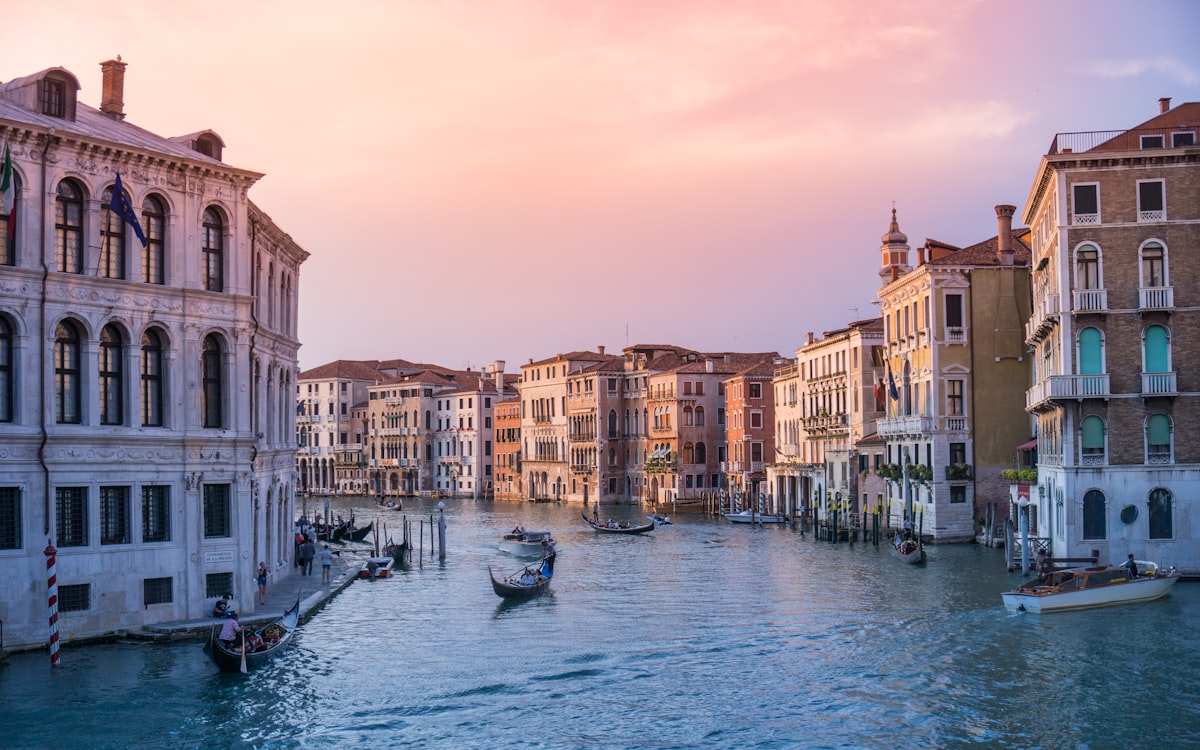
The gondola sits lower in the water than you expect. You step in, the boat rocks gently, and suddenly your eye level is about two feet above the canal surface. Everything looks different from down here. Doorways that seemed ordinary from the bridge reveal peeling frescoes. You pass under bridges so low you instinctively duck. The water makes quiet slapping sounds against ancient brickwork.
It's slow. Deliberately, beautifully slow.
The gondolier stands at the back on a raised platform and rows with a single oar, using a carved wooden oarlock called a fórcola. Watching a good gondolier navigate a tight canal intersection — turning the 11-metre boat through a gap that looks impossibly narrow — is like watching someone parallel park a limousine into a space meant for a bicycle. It shouldn't work. It always does.
For thirty minutes, you drift. No schedule, no next stop, no announcement. Just water and stone and the occasional cat watching you from a windowsill. I've been on perhaps a dozen gondola rides now (my principled resistance crumbled quickly) and the thing that strikes me every time is the silence. Venice is already quiet by city standards, but from the gondola the silence deepens. You hear dripping. You hear someone playing piano through an open window three storeys up. You hear your own breathing.
“I've photographed Venice from every angle I can manage — rooftops, bell towers, bridges, boats. The gondola showed me an angle I couldn't get any other way: looking up at the city from below.”
Where You Start Matters More Than You Think
This is the practical bit that most articles skip.
There are gondola stations scattered across Venice. The most popular — and the worst for a first ride — are the ones along the Grand Canal near San Marco and Rialto. Those routes send you straight down the Grand Canal, which sounds impressive but is actually the busiest, noisiest, most wake-heavy waterway in the city. You'll spend your romantic ride dodging vaporetti and water taxis, and the experience feels less "timeless Venice" and more "floating in traffic."
If you want a specific route, you can ask the gondolier before boarding. They know every canal in the city. I once asked one to take me through "the smallest canals you're willing to go through" and he grinned and took me down passages I didn't know existed — one so narrow that I could touch both walls simultaneously.
Some routes I'd suggest requesting:
- From Santa Maria Formosa — through the Rio di San Giovanni Laterano and connecting canals toward San Marco. Quiet, residential, beautiful.
- From San Barnaba — through the Rio di San Trovaso (you'll pass the last working gondola boatyard, the squero) and out onto the Grand Canal.
- From Rialto, but going east — instead of the Grand Canal, ask to go through the back canals of San Polo. Fewer tourists, more laundry.
The €2 Gondola That Nobody Talks About
If you want the gondola experience without the gondola price, the traghetto is your answer.
A traghetto is a gondola — same boat, same design — used as a ferry to cross the Grand Canal at points where there's no nearby bridge. It costs €2 per crossing (locals pay less). The ride lasts about 90 seconds. You stand up, because that's what Venetians do, though nobody will judge you for sitting if the water's choppy.
There are currently several traghetto crossings still operating, though the number has declined in recent years. The most reliable ones:
- Santa Sofia to Rialto fish market — near the Ca' d'Oro. Operating mornings only, usually until early afternoon.
- San Tomà crossing — useful if you're heading between San Polo and Dorsoduro.
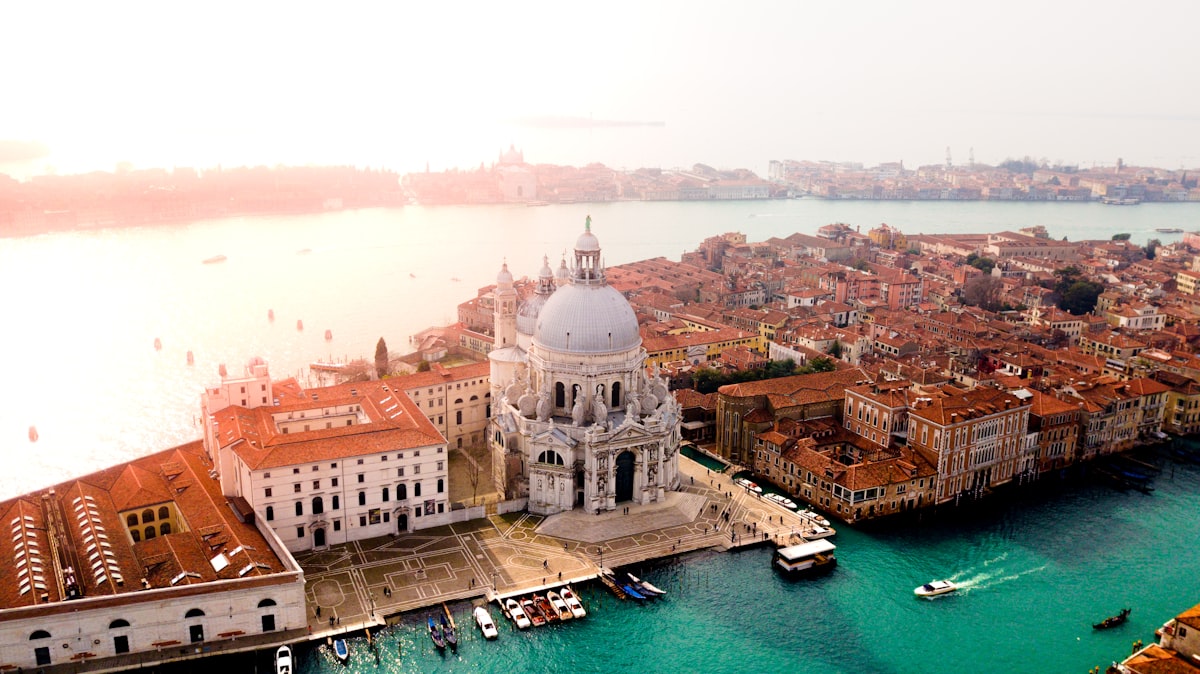
- Santa Maria del Giglio to Salute — a scenic crossing near San Marco.
Schedules are informal and change seasonally. Some crossings only run on weekday mornings. It's the kind of thing where you show up and either a traghetto is there or it isn't, which is very Venice.
Can You Negotiate the Price?
Technically, no. The tariff is fixed by the city.
Practically? It's complicated. Some gondoliers will offer a slightly longer ride for a modest tip. Some will suggest a “special route” at a premium that isn't strictly part of the official rate structure. In the off-season, when business is slow, you might find a gondolier willing to do 40 minutes for the standard 30-minute price, especially late in the day when they're hoping for one last fare.
What you shouldn't do is haggle aggressively. These are working professionals — there are only about 430 licensed gondoliers in Venice, the number hasn't changed much in decades, and it's a job that requires years of training and a demanding exam. The €80 tariff isn't arbitrary: it accounts for the boat (which costs around €30,000–40,000 and needs regular maintenance), insurance, and the gondolier's income.
As for tipping — it's not expected but appreciated. I usually round up or leave €5–10 if the experience was particularly good.
Will the Gondolier Sing?
Almost certainly not, unless you pay extra.
The singing gondolier is mostly a myth sustained by films. In reality, most gondoliers are quiet, focused professionals who might chat a bit about the buildings you're passing or point out something interesting, but who generally let you enjoy the silence. Some don't speak much English. That's fine — you don't need a commentary.
If you want singing, you can arrange it. It usually costs €30–50 extra and sometimes involves a second person (a dedicated musician with an accordion, because Venice). Some of the organised gondola "serenades" involve multiple gondolas travelling together, which has a group-tour energy that I'd personally avoid, but which some people enjoy.
I've heard exactly one gondolier sing spontaneously, on a quiet evening in November. He was alone on his boat, heading home, and he didn't know anyone was listening. It was beautiful. It was also the exception that proves the rule.
Five Hundred Years in a Very Small Boat
A few things worth knowing because they make the ride better:
Gondolas have been Venice's primary transport since the 11th century. At their peak in the 18th century, there were an estimated 10,000 of them. Today there are roughly 430, almost exclusively used for tourism and the occasional wedding.
Every gondola is black. This wasn't always the case — they were once brightly painted and decorated, until a sumptuary law in 1562 banned the ostentation. The black has stuck for nearly five centuries, which is remarkable consistency for what was essentially a dress code violation crackdown. Each boat is built from eight types of wood, is exactly 10.87 metres long, and is intentionally asymmetrical — the left side is wider than the right by about 24 centimetres — to compensate for the gondolier's weight and rowing position. According to Lonely Planet's guide to Venice gondolas, the craft's design hasn't fundamentally changed in over two hundred years.
The metal ornament at the bow (the ferro) isn't decorative — it's a counterweight for the gondolier standing at the stern. Its shape is said to represent various Venetian symbols: the six forward-facing prongs for the six sestieri (districts), the backward-facing one for the Giudecca, and the curved top for the Doge's cap. Whether any of this is historically accurate or a later invention is a matter of some debate. I choose to believe it. It's a better story that way.
So: tourist trap or worthwhile experience? Neither label quite fits. It's an expensive, slow, beautiful ride through a city that was built for exactly this kind of movement. If you go into it expecting a theme park ride, you'll be disappointed. If you go into it willing to sit quietly and watch the city slide past at walking speed from an angle you can't get any other way, you might — as I did, reluctantly, on that September evening — understand why people have been paying for this particular experience since the Renaissance.
Just don't start from the Grand Canal.