I've been inside the Doge's Palace six times, which is probably five more than most visitors manage. The reason I keep going back is the same reason the Venetian Republic kept building onto it for seven hundred years: the place reveals more each time. The rooms are so densely layered — architecturally, artistically, politically — that a single visit barely scratches the surface. You walk through the council chambers thinking about Tintoretto, and you miss the carved ceiling above you that tells a completely different story about Venetian power. You admire the staircase and don't notice the lion's mouth carved into the wall where anonymous denunciations were posted.
The Palazzo Ducale was the seat of Venetian government from the 9th century until the Republic's fall in 1797. Doge's residence, senate chamber, law courts, prison — all under one roof, or more accurately, under a series of roofs expanded and rebuilt and redecorated across centuries. The building you see today is mostly Gothic, dating from the 14th and 15th centuries, though substantial interior renovation followed a fire in 1577.
In This Article
What to Actually Look At
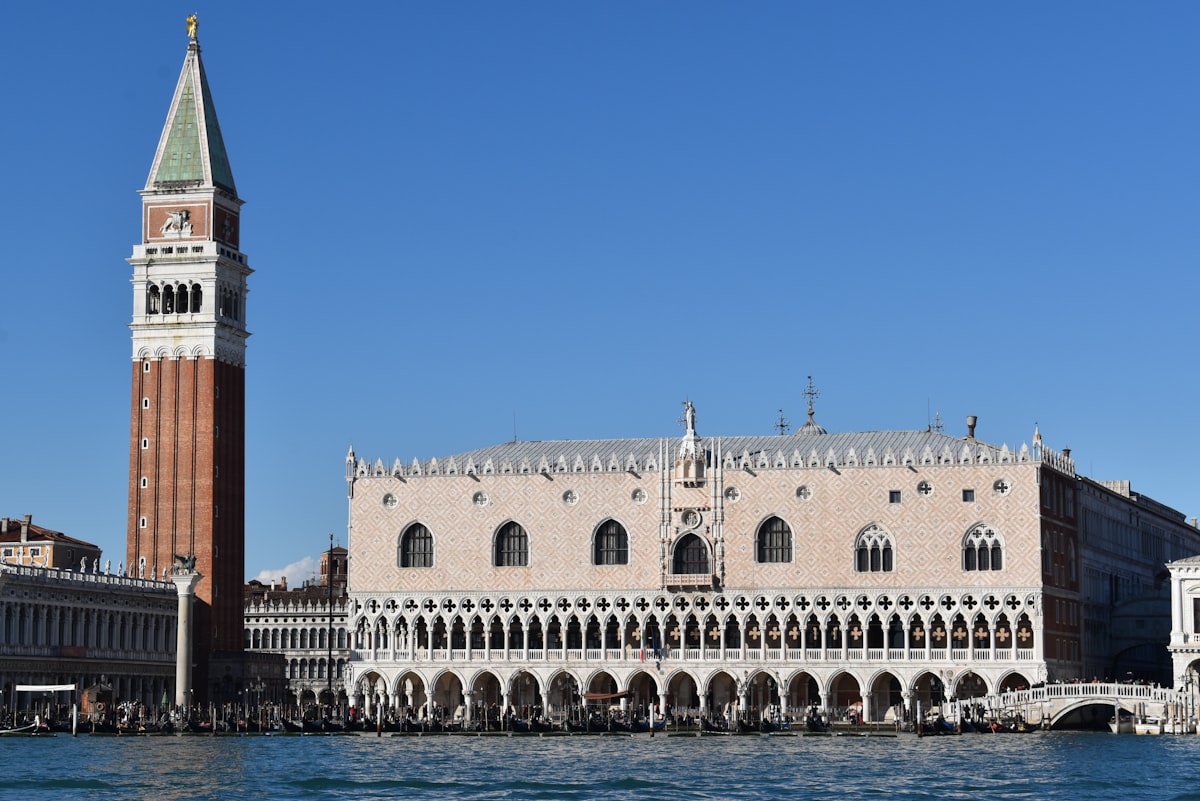
The standard visit route takes you through the palace's public and ceremonial spaces. Most people spend about 90 minutes on it. I'd suggest at least two hours, ideally two and a half, because rushing through rooms of this density is like flipping through an art book at speed — you register shapes without actually seeing anything.
The standout rooms and features:
The Scala d'Oro (Golden Staircase). Designed by Sansovino, gilded stucco ceiling by Alessandro Vittoria. This was the ceremonial entrance for visiting dignitaries and senior officials. The stucco work is so elaborate that on my first visit I literally tripped on a step because I was looking up. The acoustics are strange too — whispers carry further than they should, which I suspect was not an accident in a building devoted to political intrigue.
Sala del Maggior Consiglio (Great Council Hall). This is the room that makes people stop and stare. It's enormous — 54 metres long, 25 metres wide — and the entire far wall is covered by Tintoretto's Paradise, which at roughly 22 by 7 metres is generally considered the largest oil painting on canvas in the world. It was completed around 1592, when Tintoretto was in his seventies, and it contains somewhere north of five hundred figures. The scale is genuinely disorienting. I've stood in front of it trying to photograph it and been defeated every time — you simply can't get far enough back to capture the whole thing.
Standing in the Great Council Hall, looking up at Tintoretto's Paradise, you understand something about Venetian ambition that no book can convey. They didn't do anything by halves.
The Sala del Senato and Sala del Collegio. Smaller chambers with painted ceilings by Veronese and Tintoretto. These were the working rooms of government — where foreign ambassadors were received, where trade policy was debated, where decisions about war and alliance were made. The art on the walls and ceilings isn't decoration; it's propaganda, carefully designed to impress visitors with Venice's power, piety, and divine favour.
The Armoury. Three rooms of swords, crossbows, halberds, firearms, and a suit of armour made for Henri III of France. Less famous than the paintings but oddly compelling. There's a chastity belt in a case near the entrance which draws exactly the kind of attention you'd expect.
The Secret Itineraries Tour — Just Book It
This is my strongest recommendation for the Doge's Palace. The Itinerari Segreti is a guided tour of the rooms not included in the standard visit — the administrative offices, the torture chamber, the infamous Piombi (lead-roofed prison cells), and the route Casanova took during his legendary escape in 1756.
The tour lasts about 75 minutes, costs €28 (which includes standard palace admission), and must be booked in advance through the MUVE website. Groups are limited to about 25 people. It runs several times daily in Italian, English, and French.
What you see:
- The Chancellery offices — cramped wooden rooms where bureaucrats administered an empire. The contrast between these functional spaces and the gilded chambers upstairs says everything about how Venice actually worked.
- The torture room — small, surprisingly plain, with a hook in the ceiling from which prisoners were suspended by their wrists (a method called strappado). The guide explains the process in matter-of-fact detail. It is uncomfortable to listen to, which is perhaps the point.
- The Piombi — cells directly beneath the palace's lead roof. In summer the heat was suffocating; in winter the cold was severe. Casanova was imprisoned here for fifteen months before his famous escape through the roof. His cell is the size of a large cupboard. Standing in it, trying to imagine fifteen months of confinement, is the most affecting moment in the entire palace.
- The roof — brief access to the rooftop with views across the lagoon. On a clear day you can see the Dolomites. More importantly, you can see the lead sheeting that gave the Piombi their name, and the hole through which Casanova allegedly escaped.
The Bridge of Sighs — Let's Be Honest
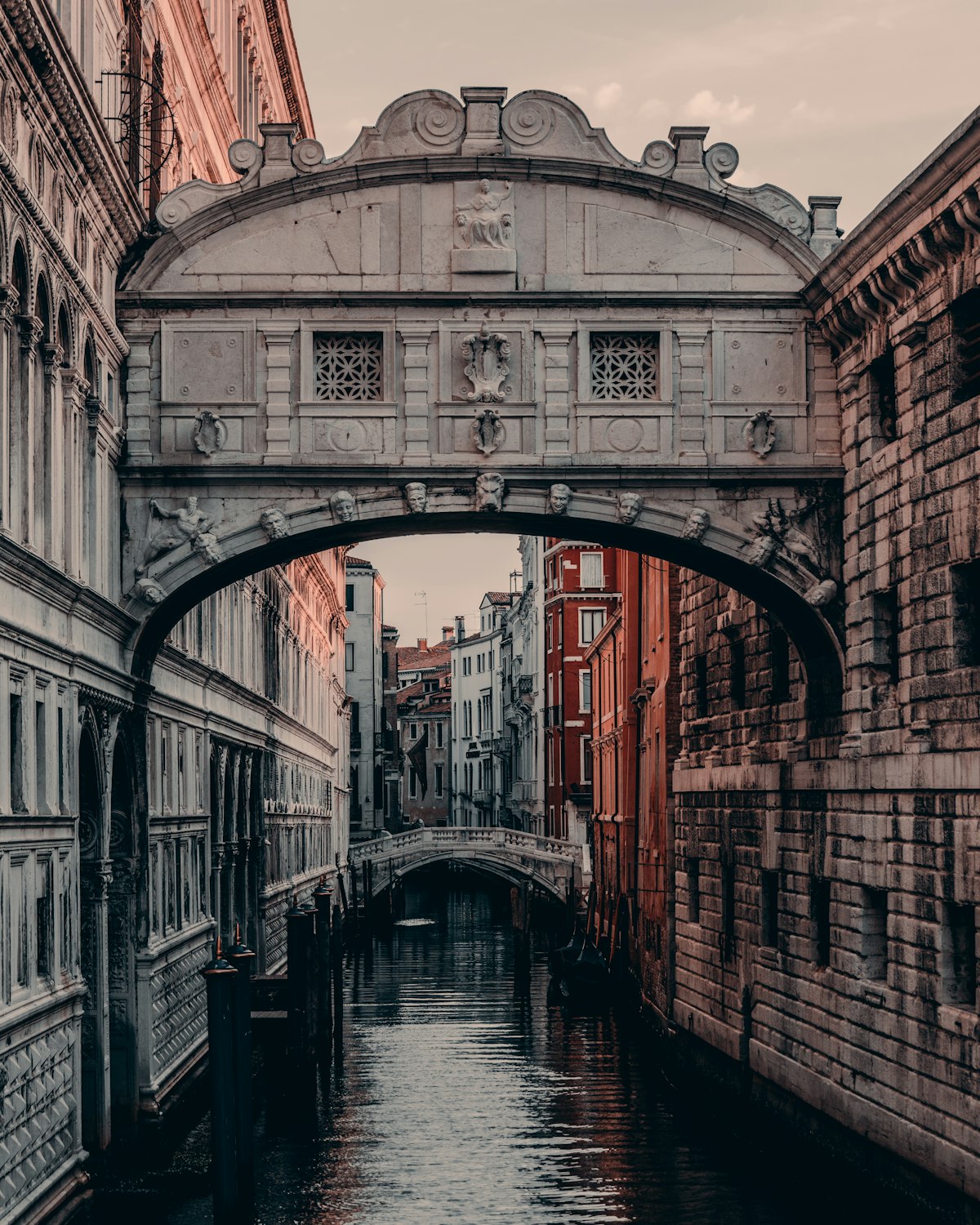
The Ponte dei Sospiri is one of the most photographed structures in Venice. It's also one of the most misunderstood.
The romantic story: prisoners walked across this bridge on their way to execution, sighing at their last view of Venice through the small windows. Byron popularised this version in 1812, and it stuck.
The reality: the bridge was built in 1600 to connect the palace to the Prigioni Nuove (new prisons) across the canal. By that date, executions had largely moved from the piazza to behind closed doors. Most prisoners crossing this bridge were being taken to relatively mundane jail cells for relatively mundane crimes — debt, petty theft, commercial fraud. The "sighs" were probably less about existential anguish and more about the prospect of sharing a damp cell with six other people.
None of which diminishes the bridge architecturally. It's a beautiful piece of Baroque design — white Istrian stone, enclosed, with two separate corridors (one for going in, one for coming out) and those famous stone-grilled windows. Walking through it during the standard palace visit gives you the interior view, which is atmospheric in a grim sort of way. The best exterior view is from the Ponte della Paglia, the stone bridge on the waterfront, though you'll be competing with approximately every other tourist in Venice for a clear photo.
Tickets and Passes
The ticketing situation is slightly convoluted, which is fitting for a building that administered one of history's most bureaucratic republics.
| Ticket Type | Price | Includes |
|---|---|---|
| Standard ticket | €26 | Doge's Palace + Museo Correr + National Archaeological Museum + Biblioteca Marciana |
| Secret Itineraries | €28 | Guided tour of secret rooms + standard palace visit + Correr/Archaeology/Library |
| Museum Pass (MUVE) | €35 | All 11 civic museums including Doge's Palace (valid 6 months) |
| Reduced (6–14, students, 65+) | €15 | Same as standard |
| Children under 6 | Free | — |
The standard ticket is oddly good value because it includes four venues. The Museo Correr alone (upstairs on Piazza San Marco) has an excellent collection of Venetian paintings and historical artefacts, and the Biblioteca Marciana — Sansovino's 16th-century library — has one of the most beautiful reading rooms I've ever seen. Most people visit only the Doge's Palace and ignore the other three, which means the Correr is often practically empty. Their loss.
If you plan to visit Ca' Rezzonico, Ca' Pesaro, or any other civic museum, the full Museum Pass at €35 is an obvious step up from the €26 standard ticket. Nine extra euros for access to seven additional museums is arithmetically difficult to argue with.
When to Go and How Long to Allow
The palace opens at 9am and closes at 6pm (last entry 5pm) from April through October, with slightly shorter hours in winter. The busiest period is 10am to 2pm, when the cruise ship passengers arrive and the tour groups move through in waves.
Two strategies work:
- Early morning. Be at the entrance at 8:50am. The first thirty minutes inside are the closest you'll get to having the place to yourself. By 10am the Great Council Hall starts filling; by 11am it's crowded. If you arrive at 9am and move at a steady pace, you can see the main rooms in relative peace.
- Late afternoon. After 3pm, the tour groups thin out and the light through the windows changes — the rooms on the west side of the building catch the afternoon sun, and the golden ceilings seem to glow. I've photographed the Scala d'Oro at 4pm in October and the quality of light was extraordinary.
Allow two to three hours for the standard visit, or three to four if you're combining it with the Secret Itineraries tour. The tour itself is 75 minutes, plus you'll want time before or after for the public rooms.
The prisons — accessible via the Bridge of Sighs on the standard route — are the last section before the exit. They're also the most atmospherically interesting part of the building for me. Cold stone, small windows, graffiti scratched by inmates centuries ago. Don't rush through just because you can see the gift shop ahead.
The exterior of the palace is worth studying too, ideally before you go inside. The ground-floor colonnade with its carved capitals — each one different, depicting everything from the Creation to the zodiac to the trades and crafts of Venice — is a complete encyclopaedia in stone. I've spent a full hour walking the perimeter examining these carvings with a telephoto lens, which is either dedication or mild obsession, depending on your point of view.
For more on the artistic context around the palace, the art and museums guide covers the Accademia, churches, and Biennale. And if you're planning a full day around San Marco, the piazza guide covers the Basilica, Campanile, and how to actually enjoy the square without losing your mind in the crowds.